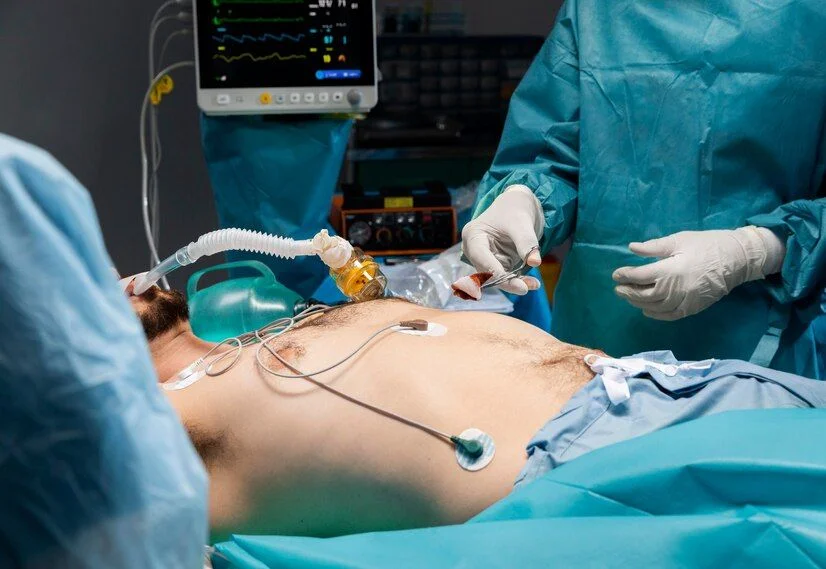
Long-Term Medicines vs Laser Treatment for Haemorrhoids | Which Is Better?

Long-Term Medicines vs Single-Day Laser for Haemorrhoids: Which Treatment Is Right for You?
Introduction: Medicines Every Day or Laser in a Single Day?
Imagine dealing with bleeding, itching or discomfort every time you use the toilet.
You try medicines. The symptoms improve. Then, after some time, they return.
This makes many patients ask an important question:
“Should I continue medicines for a long time, or should I consider a single-day laser treatment for my piles?”
The answer is not the same for everyone.
Haemorrhoids, commonly called piles, can range from mild symptoms that respond well to conservative care to disease that needs a procedure. The right treatment depends on the type, grade, symptoms and overall health of the patient.
Laser treatment has become a minimally invasive option for selected patients, but it should not be presented as the best choice for every person. Current guidance recommends conservative treatment as an important first step, while office procedures are commonly used when symptoms continue.
What Are Haemorrhoids?
Haemorrhoids are swollen blood vessels and supporting tissues in the lower rectum or around the anus.
They may be:
- Internal haemorrhoids – inside the rectum
- External haemorrhoids – under the skin around the anus
The treatment can be different depending on which type is present and how advanced it is.
Symptoms: When Should You Pay Attention?
Common haemorrhoids symptoms include:
- Bright-red bleeding while passing stool
- Itching around the anus
- Pain or discomfort
- Swelling
- A lump near the anus
- Tissue coming out during bowel movements
- Irritation after passing stool
Rectal bleeding should not automatically be blamed on piles. A doctor may need to check for other causes before treatment begins.
Causes: Why Do Haemorrhoids Develop?
Several factors can increase the risk of haemorrhoids.
Common contributors include:
- Constipation
- Hard stools
- Repeated straining
- Spending too long on the toilet
- Low-fiber eating habits
- Frequent diarrhoea
- Pregnancy
- Increasing age
- Heavy lifting
These factors can increase pressure around the veins and supporting tissues in the anal region.
Diagnosis: Medicines or Laser Should Come After Proper Evaluation
Before deciding between long-term medicines and laser treatment for piles, the condition needs to be assessed.
A surgeon may ask about bleeding, pain, bowel movements and prolapse. An examination may include inspection of the anal area, digital rectal examination and, when required, anoscopy.
The doctor may also determine the grade of internal haemorrhoids.
Treatment should be selected according to the patient—not simply because one procedure is advertised as faster.
Treatment: Long-Term Medicines vs Single-Day Laser
Option 1: Long-Term Medicines and Conservative Treatment
For many patients with mild piles symptoms, the first approach is conservative treatment.
This can include measures to improve stool consistency and bowel habits, along with medicines when appropriate.
The goal is simple: make bowel movements easier and reduce the pressure and irritation that can worsen symptoms.
This approach can be effective, especially when symptoms are mild. However, some patients may continue to experience bleeding or prolapse despite conservative treatment.
Current ASCRS guidance recommends medical/conservative treatment as an important part of management, with office procedures used for many symptomatic grade I and II haemorrhoids and selected grade III cases that do not respond adequately.
The possible advantage
No procedure is required, and treatment can often begin with changes in bowel habits and appropriate medical care.
The possible limitation
Some patients may need ongoing management, and symptoms can return if the underlying problem continues.
Option 2: Single-Day Laser Treatment
Laser haemorrhoid treatment is a minimally invasive technique used for selected patients with symptomatic haemorrhoids.
Depending on the specific laser technique and the patient's condition, laser energy is used to shrink or treat haemorrhoidal tissue.
Modern recommendations have been developed specifically for laser haemorrhoidoplasty, although the evidence base is still developing and different laser techniques are not identical.
Some clinical studies report advantages such as less postoperative pain and quicker return to normal activities compared with more extensive surgery. However, laser is not automatically the best option for every grade or type of haemorrhoid.
The possible advantage
For appropriately selected patients, laser may offer a minimally invasive treatment with a relatively short recovery.
The possible limitation
It may not be suitable for every patient, and haemorrhoids can recur. The long-term results also depend on the type and severity of disease and the technique used.
So, Which Is Better?
There is no universal answer to “medicines vs laser for piles.”
A patient with mild symptoms may do very well with conservative treatment.
Another patient who has persistent bleeding or prolapse despite appropriate medical care may benefit from a procedure.
For selected patients, laser treatment for haemorrhoids can be an attractive minimally invasive option. But treatment should be based on proper examination rather than choosing laser simply because it sounds faster or more modern.
The best treatment is the one that matches your condition.
Recovery: What Can Patients Expect After Laser?
Recovery varies according to the procedure, the grade of haemorrhoids and the individual patient.
Laser techniques are generally designed to reduce tissue injury compared with more extensive excisional surgery. Studies have reported relatively low postoperative pain and a return to normal activity in a shorter period for selected patients.
Your surgeon will provide specific instructions about medicines, bowel movements, activity and follow-up.
Remember that single-day treatment does not mean every patient will have exactly the same recovery time.
Complications: Is Laser Completely Risk-Free?
No medical procedure is completely risk-free.
Possible issues after haemorrhoid procedures can include pain, bleeding, swelling, infection or recurrence. The exact risks depend on the procedure and the individual patient.
Laser studies have shown promising results, but research quality has varied, and experts continue to study long-term outcomes.
That is why choosing an experienced surgeon and having a proper diagnosis are important.
Benefits of Choosing the Right Treatment
Getting the correct treatment can help patients:
- Control bleeding and discomfort
- Improve bowel-related symptoms
- Reduce repeated episodes
- Avoid unnecessary long-term treatment
- Return to normal activities
- Choose a treatment suited to their condition
The biggest benefit is not simply choosing medicine or laser.
It is choosing the right treatment for the right patient at the right time.
Don't Keep Managing the Same Problem Again and Again
If piles symptoms keep returning despite medicines, it may be time to stop guessing and get the condition properly evaluated.
And if your symptoms are mild, you may not need a procedure at all.
A proper consultation can help you understand whether long-term medical treatment, an office procedure or laser haemorrhoid treatment is appropriate for you.
Looking for a Piles Doctor in Visakhapatnam?
Consult Dr. Naveen Kumar Anem, MBBS, DNB (General Surgery), FMAS, FIAGES, Laparoscopic & GI Surgeon for evaluation and personalised guidance for haemorrhoids and other gastrointestinal conditions.
Don't choose a treatment because it sounds faster. Choose it because it is right for you.
BOOK YOUR APPOINTMENT TODAY
👨⚕️ Doctor Reviewed
This blog has been medically reviewed by Dr. Naveen Kumar Anem, MBBS, DNB (General Surgery), FMAS, FIAGES, Laparoscopic & GI Surgeon.
This article is intended for general health education and does not replace an individual medical consultation. Treatment decisions should be made after proper examination by a qualified medical professional.