
Hernia: Symptoms, Causes & Best Hernia Treatment | Laparoscopic Hernia Surgery | Vizag
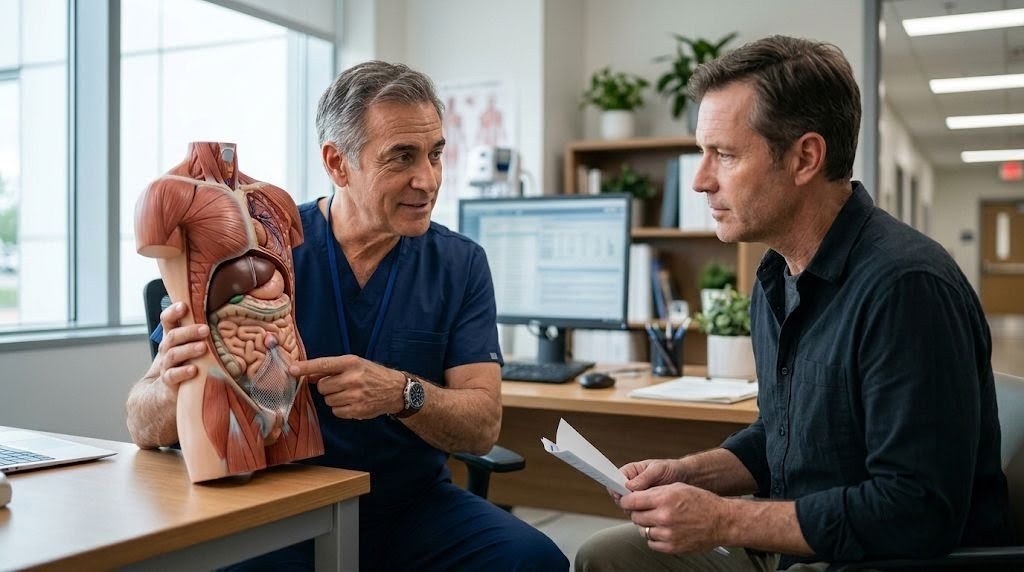
Hernia: The Small Lump That Can Become a Big Problem
Have you noticed a small lump near your stomach or groin that appears when you stand, cough, or lift something heavy? Many people think it will go away on its own. Unfortunately, it usually doesn't.
A hernia is a common condition that affects people of all ages. At first, it may not cause much pain, but if left untreated, it can become serious and even require emergency surgery.
The good news is that today's laparoscopic hernia surgery offers a safe, effective, and faster way to treat hernias with minimal pain and quicker recovery.
Let's understand everything about hernia in a simple and easy-to-read way.
What Is a Hernia?
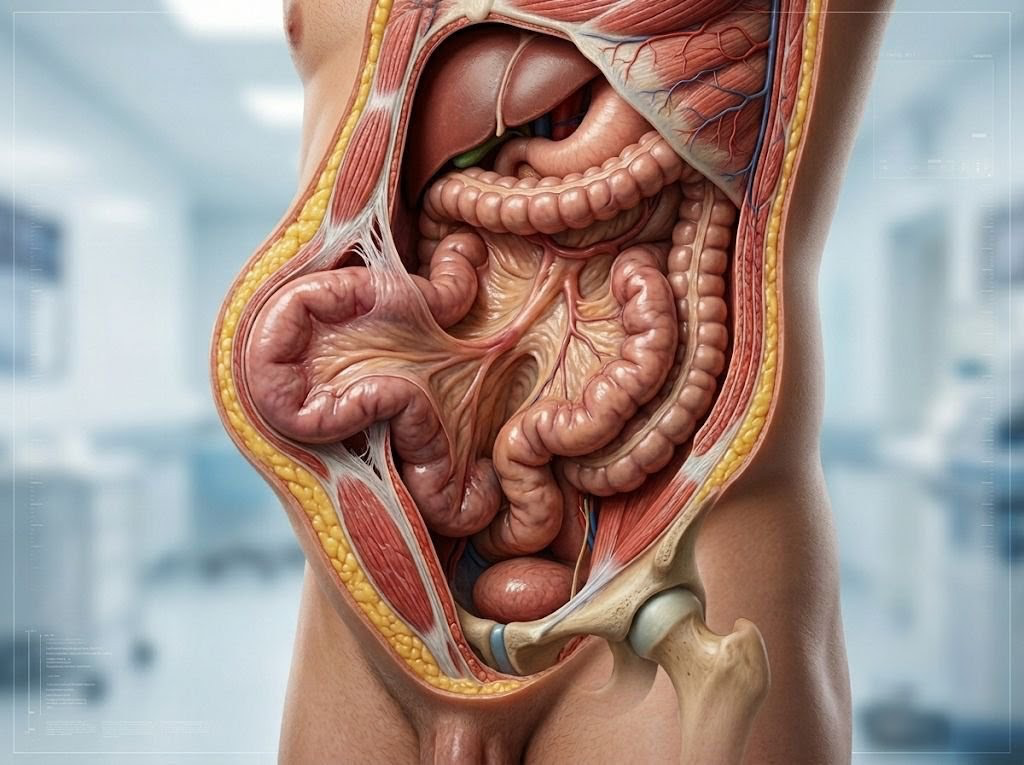
A hernia happens when an internal organ or fatty tissue pushes through a weak spot in the muscles that normally hold it in place.
Think of your abdominal muscles like the walls of a strong bag. If a weak area develops, something inside can bulge out, creating a lump.
A hernia does not usually heal on its own. In most cases, it becomes larger over time.
Common Types of Hernia
Different hernias occur in different parts of the body.
Inguinal Hernia
The most common type. It develops in the groin area and is more common in men.
Umbilical Hernia
Appears near the belly button. It can affect babies and adults.
Femoral Hernia
Occurs just below the groin and is more common in women.
Incisional Hernia
Develops at the site of a previous abdominal surgery.
Hiatal Hernia
Occurs when part of the stomach moves upward through the diaphragm into the chest.
Each type may require a different treatment approach, so proper diagnosis is important.
What Causes a Hernia?
A hernia usually develops because of weakness in the muscles combined with pressure inside the abdomen.
Common causes include:
- Lifting heavy weights without proper support
- Long-term coughing
- Chronic constipation with straining during bowel movements
- Obesity
- Pregnancy
- Previous abdominal surgery
- Aging
- Family history
Sometimes, people are born with weak muscles that later develop into a hernia.
Symptoms of Hernia
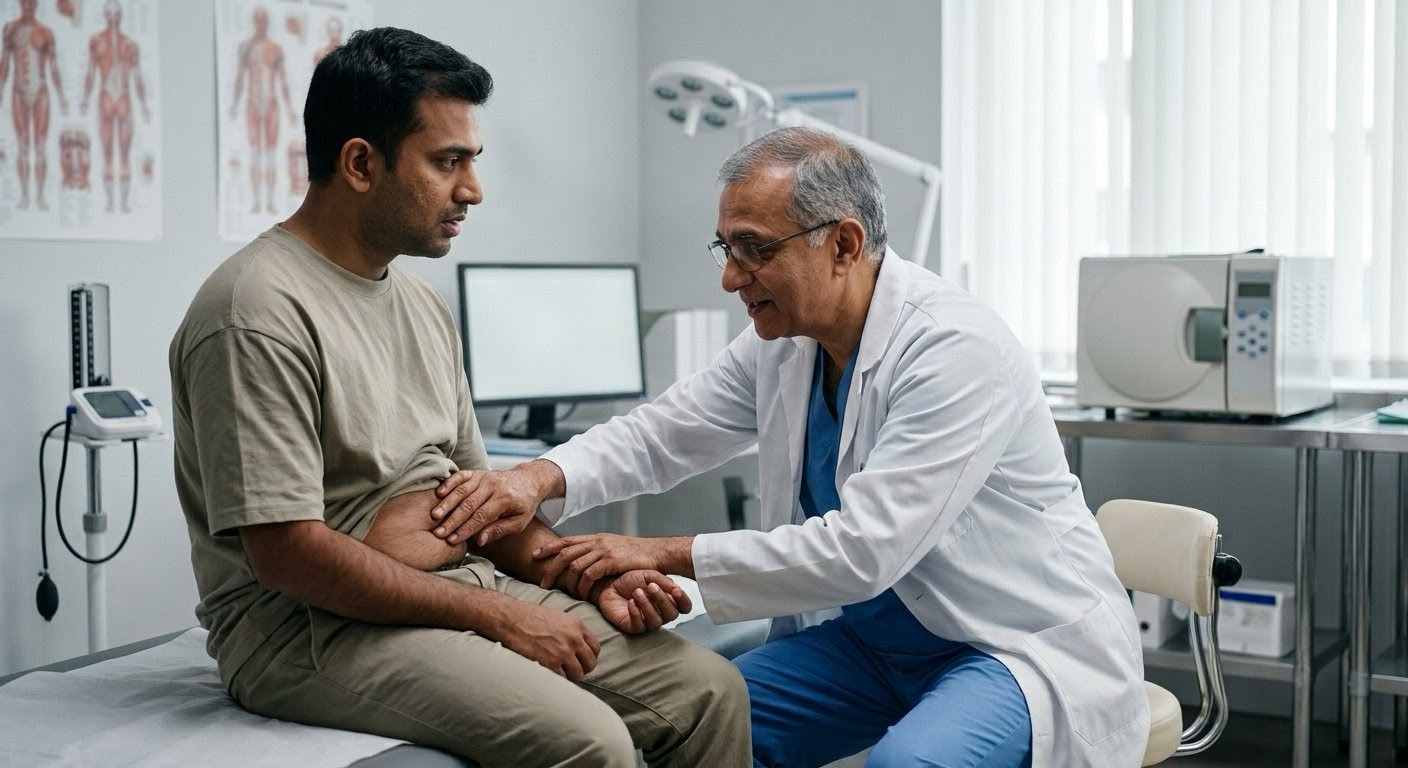
Many people first notice a small lump that comes and goes.
Common symptoms include:
- Visible lump or swelling
- Pain while lifting heavy objects
- Groin discomfort
- Feeling of heaviness
- Pain when coughing or bending
Usually the lump decreases in size on lying down position.
Seek immediate medical attention if:
- The lump becomes hard and cannot be pushed back.
- Severe pain develops suddenly.
- Vomiting and abdominal fullness
- The skin over the lump turns red or purple.
These signs may indicate a strangulated hernia, which is a surgical emergency.
Can a Hernia Heal Without Surgery?
This is one of the most common questions patients ask.
The simple answer is No.
A hernia does not repair itself because the muscle opening remains weak. Medicines may temporarily reduce discomfort but cannot close the hole in the muscle.
The only permanent treatment is hernia surgery.
How Is a Hernia Diagnosed?
Most hernias can be diagnosed through a physical examination.
If needed, your doctor may recommend:
- Ultrasound
- CT Scan
- MRI Scan
- Endoscopy (for certain hiatal hernias)
Early diagnosis allows treatment before complications develop.
Best Treatment for Hernia
The treatment depends on the size, type, and symptoms of the hernia.
Watchful Waiting
Very small hernias without symptoms may be monitored for some patients under medical supervision.
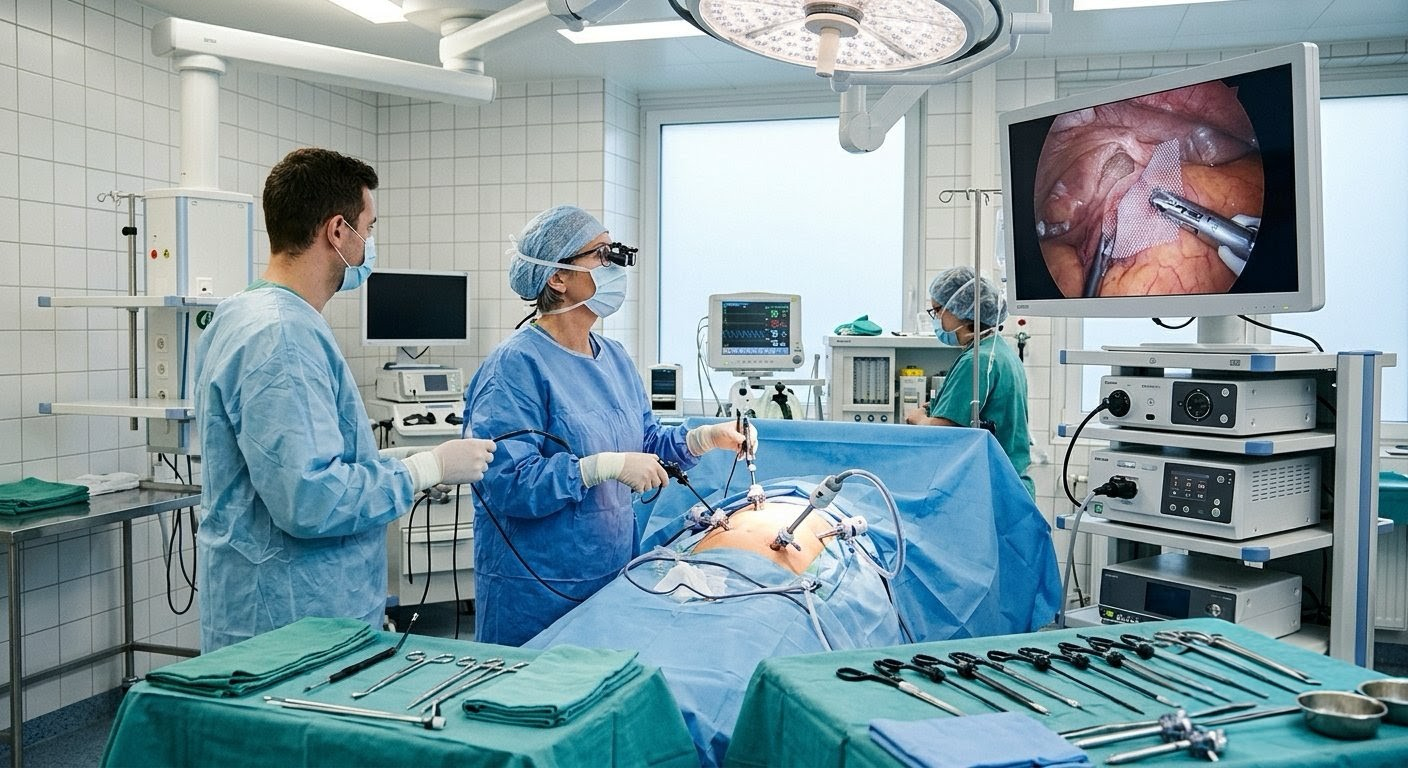
Laparoscopic Hernia Surgery
Today, laparoscopic hernia repair is one of the most preferred treatment options.
During the procedure:
- Tiny cuts are made.
- A camera guides the surgeon.
- The weak muscle is repaired.
- A surgical mesh is usually placed to strengthen the area.
This modern technique has become the preferred option for many patients because of its faster recovery.
Benefits of Laparoscopic Hernia Surgery
.jpeg)
Compared with traditional open surgery, laparoscopic surgery offers many advantages:
- Smaller cuts
- Less pain
- Minimal blood loss
- Lower infection risk
- Smaller scars
- Faster recovery
- Shorter hospital stay
- Earlier return to work
Many patients return to light daily activities within a few days, depending on their doctor's advice.
What Happens If a Hernia Is Left Untreated?
Ignoring a hernia may lead to:
- Increasing size of the hernia
- Intestinal blockage
- Intestinal gangrene
These conditions are sometimes life threatening and require major surgeries.
Getting treatment early usually makes recovery easier and helps prevent complications.
Expert Hernia Care Matters
Choosing an experienced surgeon plays an important role in successful hernia treatment.
Dr. Naveen Kumar Anem, an experienced laparoscopic surgeon, carefully evaluates every patient and recommends the most suitable treatment based on the type and severity of the hernia. His focus is on safe surgery, faster recovery, and helping patients return to their normal routine as soon as possible.
Final Thoughts
A hernia may begin as a small lump, but it should never be ignored. Although it may not always cause severe pain in the beginning, it can become dangerous if left untreated.
Modern laparoscopic hernia surgery provides a safe, minimally invasive solution with quicker recovery and excellent outcomes.
Why Choose Early Hernia Treatment?
✔ Prevents emergency complications
✔ Reduces pain and discomfort
✔ Allows faster recovery with laparoscopic surgery
✔ Helps you return to work and family life sooner
✔ Improves long-term quality of life
Doctor Review
Medically Reviewed by Dr. Naveen Kumar Anem
This article has been medically reviewed by Dr. Naveen Kumar Anem to ensure that the information is medically accurate, evidence-based, and easy for patients and families to understand. Our aim is to provide reliable healthcare information that empowers you to make informed decisions.